Main Content
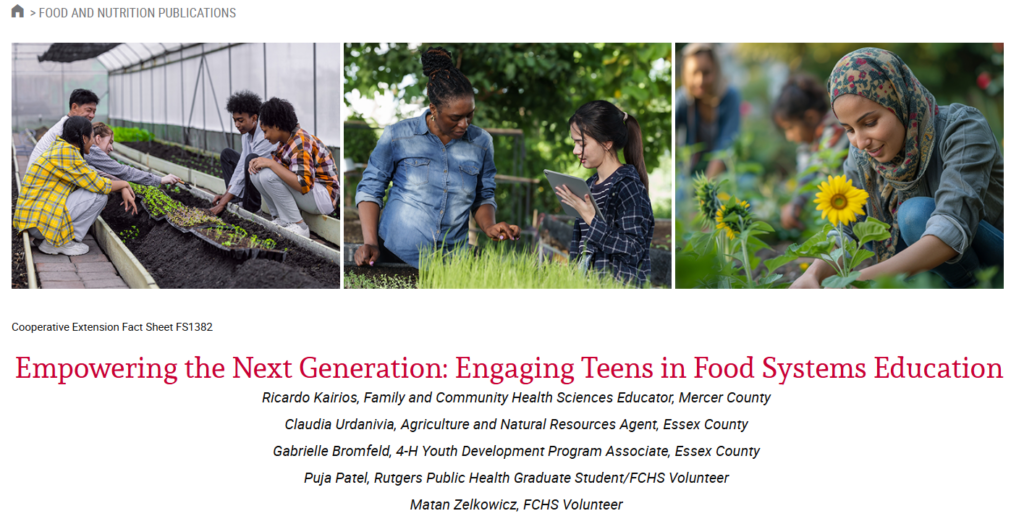
We’re excited to share a newly published Rutgers Cooperative Extension fact sheet co-authored by Ricardo Kairios and created in collaboration across Family and Community Health Sciences (FCHS), Agriculture and Natural Resources (ANR), and 4 H Youth Development. Empowering the Next Generation: Engaging Teens in Food Systems Education highlights why involving teens in food systems learning is essential for building healthier communities, supporting local food environments, and preparing young people to become future leaders in sustainability and social change.
Teens are at a crucial stage in their development, forming habits, shaping identity, and seeking meaningful ways to contribute to their communities. Food systems education meets them at this moment by connecting food, health, environment, and social justice in ways that feel relevant to their lives. Whether through school programs, after school clubs, youth groups, or community organizations, teens can develop lifelong skills that support well being while gaining a deeper understanding of how food moves from farm to fork.
Below are three key things to know from the new fact sheet:
- Food systems education builds teens’ knowledge and agency by helping them understand how food moves from farm to plate and how their choices impact their health, community, and environment.
- Teens can meaningfully strengthen community food security through activities like gardening, volunteering, and advocating for equitable food access, which build connection, confidence, and social awareness.
- Effective engagement meets teens where they are by making learning relevant to their lives, elevating their leadership, and offering hands-on, inclusive experiences that inspire curiosity and long-term involvement.
This new fact sheet offers a clear, practical guide for anyone working with youth across schools, community programs, and Extension initiatives. To learn more and explore the full set of strategies and recommendations, check out the complete publication.